
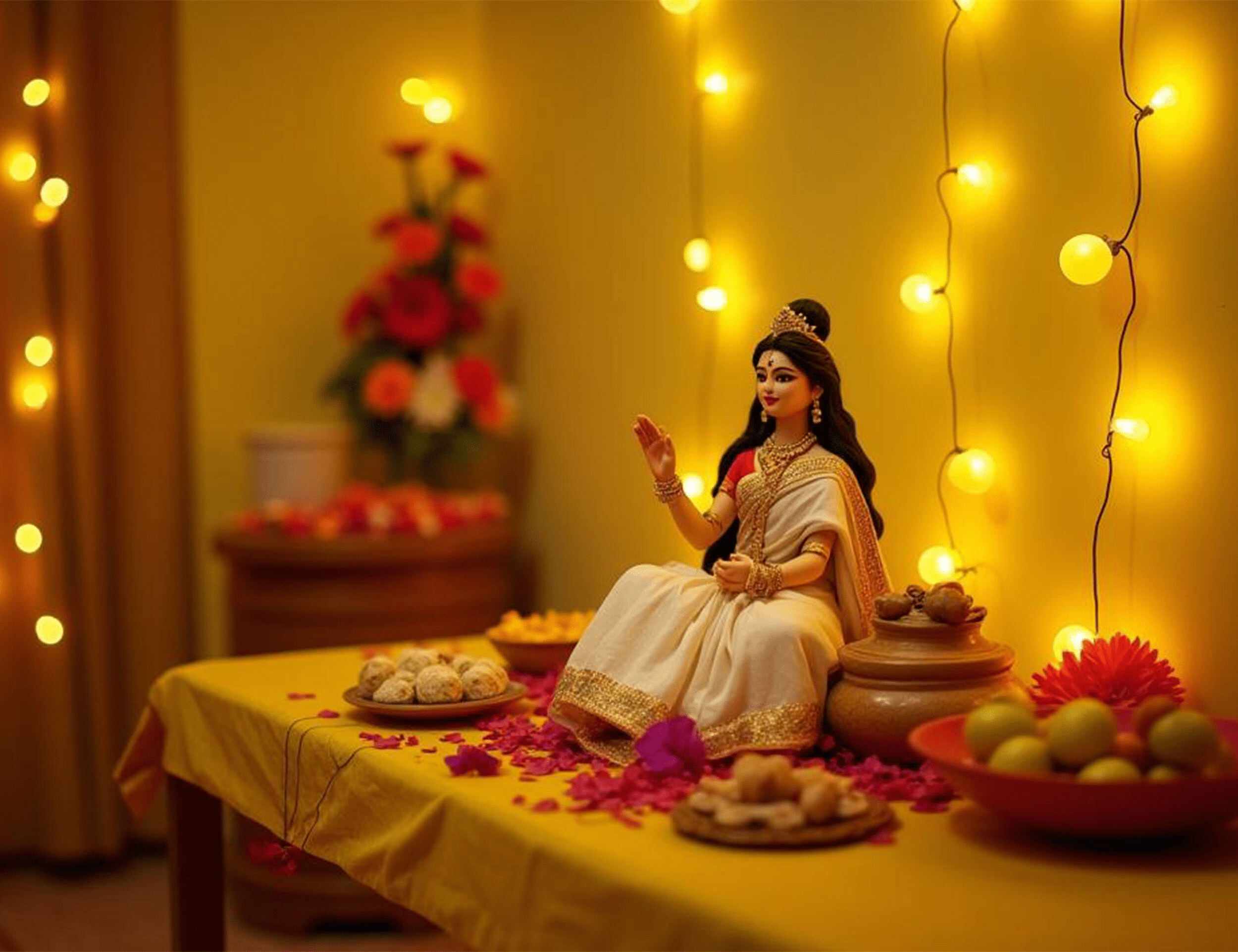
Saraswati Puja 2026 marks one of the most meaningful spiritual moments of the early year, blending seasonal change with devotion to knowledge and creativity. Celebrated on Basant Panchmi, this festival welcomes spring while honouring Saraswati, the goddess of learning, music, speech, and wisdom. For students, artists, and families, the day carries both emotional and cultural weight.
Questions around basant panchmi date surface every year, especially among households planning rituals and school observances. In 2026, the answer is clearly defined by the Hindu calendar. Saraswati Puja 2026 will be observed on January 23, a day that symbolises renewal, clarity, and intellectual awakening. Yeh din sirf puja ka nahi, man aur soch ke naye mausam ka bhi hota hai.
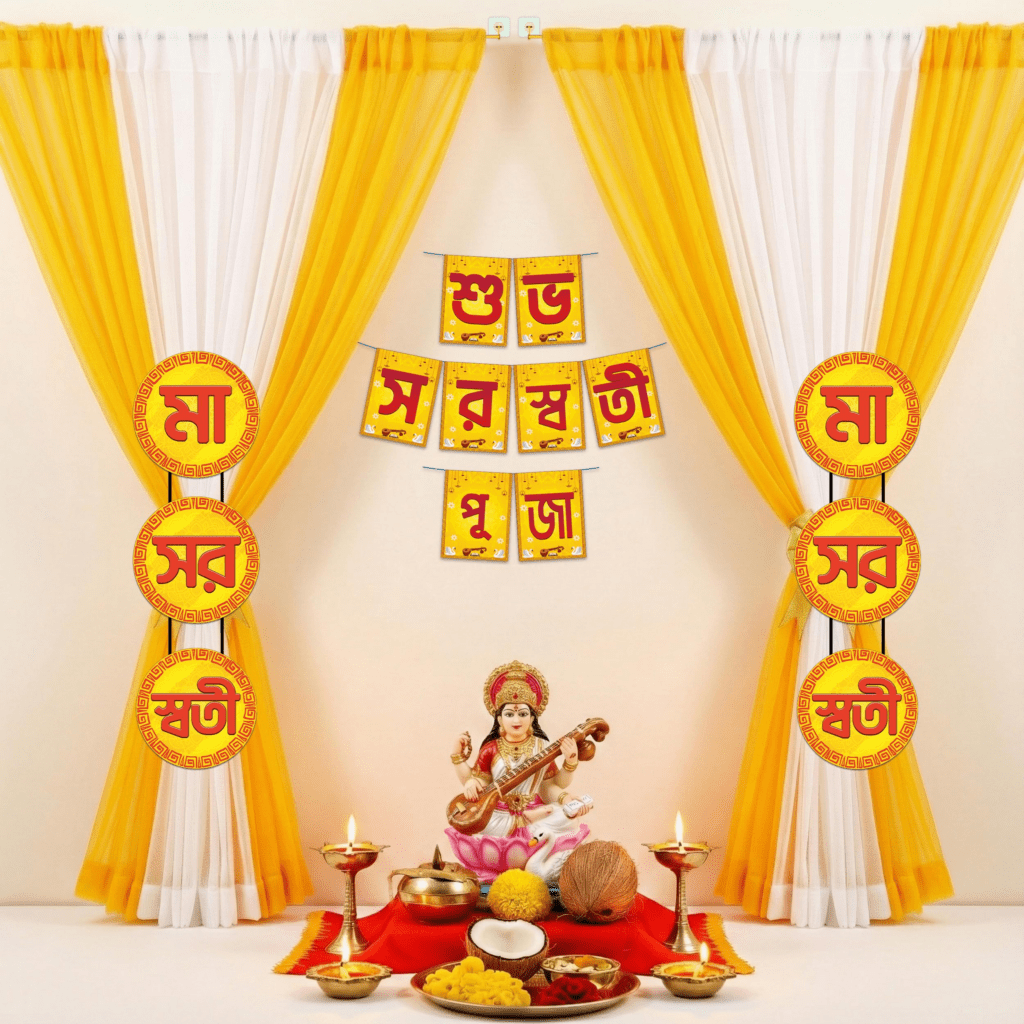
Basant Panchmi Date and Saraswati Puja 2026 Timing
The basant panchmi date is fixed according to the Hindu lunar calendar, falling on the fifth day of the bright half of Magha month. In 2026, this alignment places Saraswati Puja on a winter-to-spring threshold.

Confirmed Date for 2026
Saraswati Puja 2026 will be celebrated on Friday, January 23. This date is widely accepted across regions, educational institutions, and temples.
The festival coincides with the symbolic arrival of spring, known as Basant Ritu, when fields begin to change colour and days feel perceptibly lighter.
Saraswati Puja Muhurat
The most auspicious time for Saraswati Puja on January 23, 2026 is:
- Puja Muhurat: 7:13 AM to 12:33 PM
This window is considered ideal for prayers, offerings, and educational rituals. Many households complete the main worship before midday, allowing students to participate fully.
Why Saraswati Puja Holds Special Importance
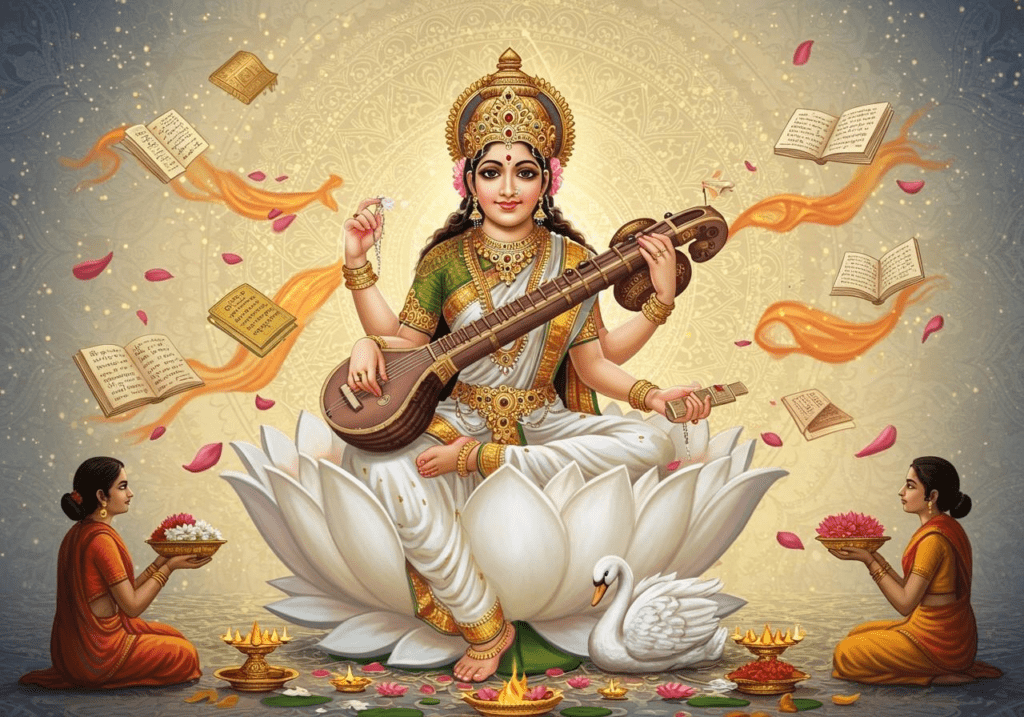
Among Hindu festivals, Saraswati Puja carries a distinct intellectual and creative focus. Unlike rituals centred on prosperity or protection, this day emphasises learning, discipline, and expression.
Goddess of Knowledge and Arts
Saraswati represents:
- Vidya or formal education
- Sangeet and kala, including music and arts
- Shuddh vaani, or clarity in speech
On Saraswati Puja 2026, books, instruments, and tools of learning are placed near the deity as symbols of respect. Many students avoid writing or reading before the puja, treating knowledge itself as sacred.
Cultural Belief and Devotion
It is widely believed that Saraswati was born on Basant Panchmi. This belief strengthens the emotional connection between the festival and academic aspiration. Schools, colleges, and cultural centres often organise prayers, recitations, and performances.
Is it any surprise that Saraswati Puja feels deeply personal to those shaping their future through learning?
Basant Panchmi and the Arrival of Spring
Basant Panchmi is not only a religious event but also a seasonal marker. It announces the shift from cold restraint to gentle warmth, reflected in nature and daily life.
Symbolism of Yellow
Yellow dominates Saraswati Puja 2026 celebrations for clear reasons:
- It mirrors blooming mustard fields
- It symbolises optimism and energy
- It reflects the brightness of spring sunlight
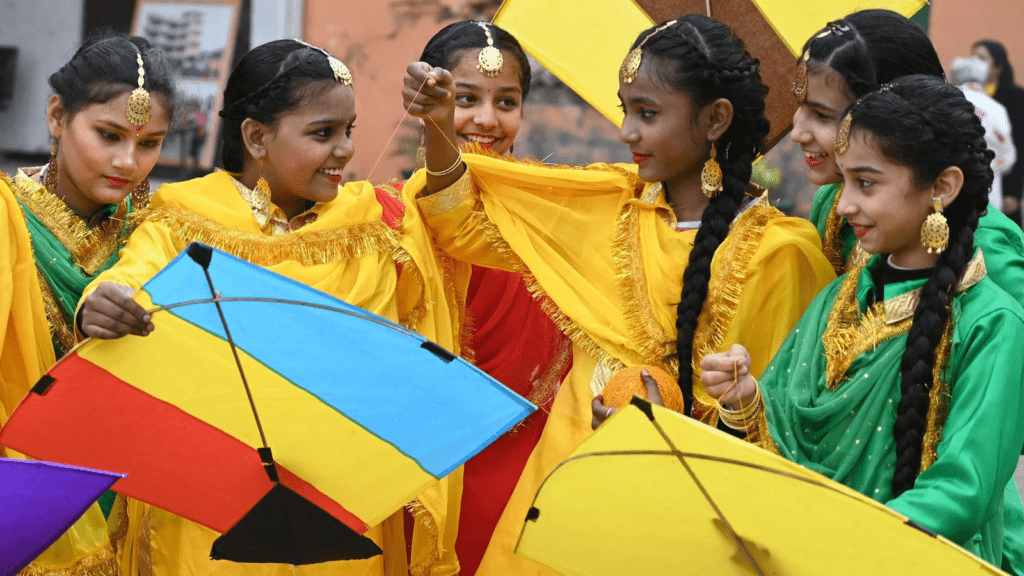
People wear yellow or white clothes, decorate homes with marigolds, and prepare saffron-tinted sweets. Rang aur prakriti ka yeh sambandh festival ko zinda bana deta hai.
Regional Expressions of Basant
In North India, Basant Panchmi includes kite flying, echoing the joy of open skies. In eastern states like West Bengal, Odisha, and Assam, Saraswati Puja becomes the primary identity of the day, observed with elaborate rituals and student participation.
How Saraswati Puja Is Observed at Home
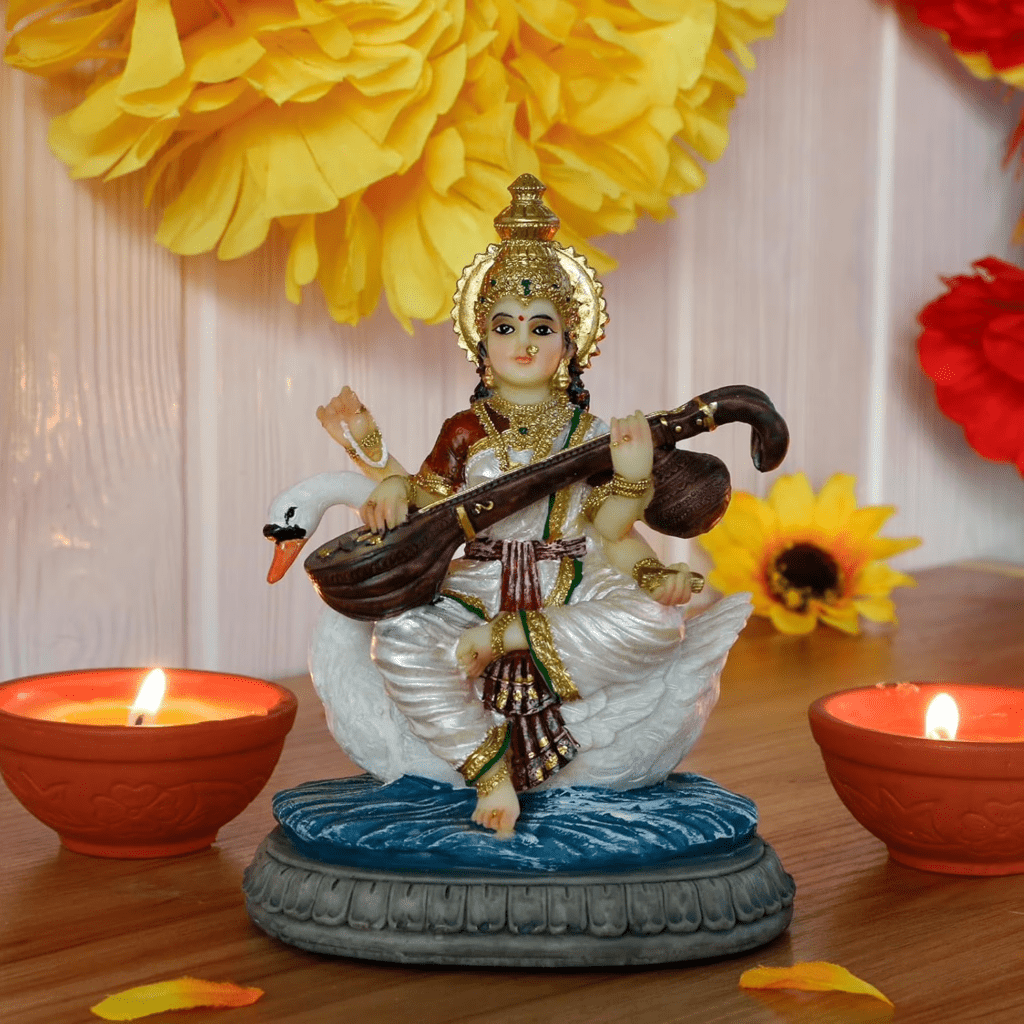
Household worship remains central to Saraswati Puja 2026, especially in families with students. The rituals are simple but structured, emphasising discipline and intention.
Common Preparations
Before the puja, homes are cleaned and decorated. A small altar is arranged with an idol or image of Saraswati, often placed on a yellow cloth.
Key preparations include:
- Early morning bath and clean attire
- Use of yellow or white clothing
- Arrangement of books and instruments near the altar
Students often fast until pushpanjali, the offering of flowers.
Items Used in Saraswati Puja
The samagri used during Saraswati Puja typically includes:
- Idol or picture of Saraswati
- Yellow flowers like marigold
- Fruits such as bananas and apples
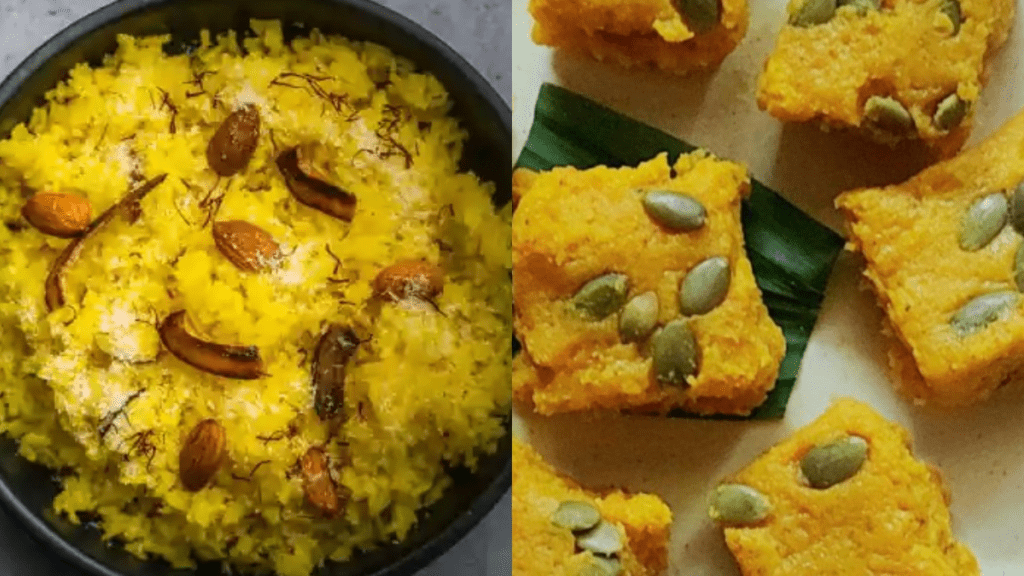
- Sweets including kesar halwa or boondi ladoo
- Incense, lamp, and ghee
- Books, notebooks, pens, and musical instruments
Each item reflects an aspect of learning or purity.
Direction, Dress, and Conduct During Puja
Ritual details matter on Basant Panchmi, not as rigid rules but as symbolic acts aligned with intention.
Dress and Orientation
Devotees are advised to wear yellow, white, or light shades. Black and red are generally avoided. During the puja, facing east or north is considered favourable, creating a calm and focused environment.
Offerings and Prasadam
Offerings are made using the right hand, often including sandalwood paste and fresh flowers. Popular prasadam choices are:
- Kesar kheer made with saffron
- Misri mixed with curd
- Lawa-based sweets in some regions
These offerings symbolise sweetness in thought and clarity in knowledge.
Saraswati Puja in Schools and Educational Institutions
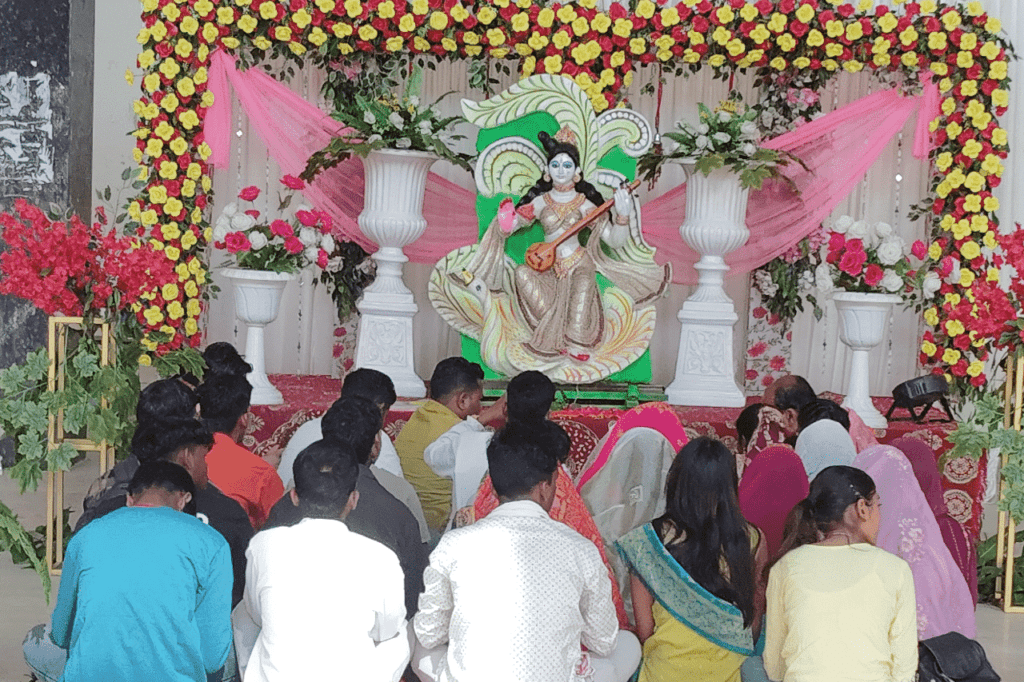
Saraswati Puja 2026 holds a unique place in schools, colleges, and learning centres across India. Unlike many festivals that remain confined to homes or temples, this observance moves directly into classrooms and campuses.
Role of Students and Teachers
Students take an active role in organising Saraswati Puja on Basant Panchmi. Temporary pandals are set up, idols are installed, and collective prayers are performed. Teachers participate not as instructors, but as fellow seekers of knowledge.
Common practices include:
- Group recitation of mantras
- Placement of books and exam materials before Saraswati
- Cultural programs featuring music, poetry, and dance
Is din padhai aur shraddha ek hi dhara mein mil jaate hain, creating a rare sense of shared purpose.
Educational Symbolism
On Saraswati Puja 2026, learning is not treated as obligation but as blessing. Many institutions suspend regular classes for the day, reinforcing the idea that education is more than routine assessment.
Regional Variations of Saraswati Puja
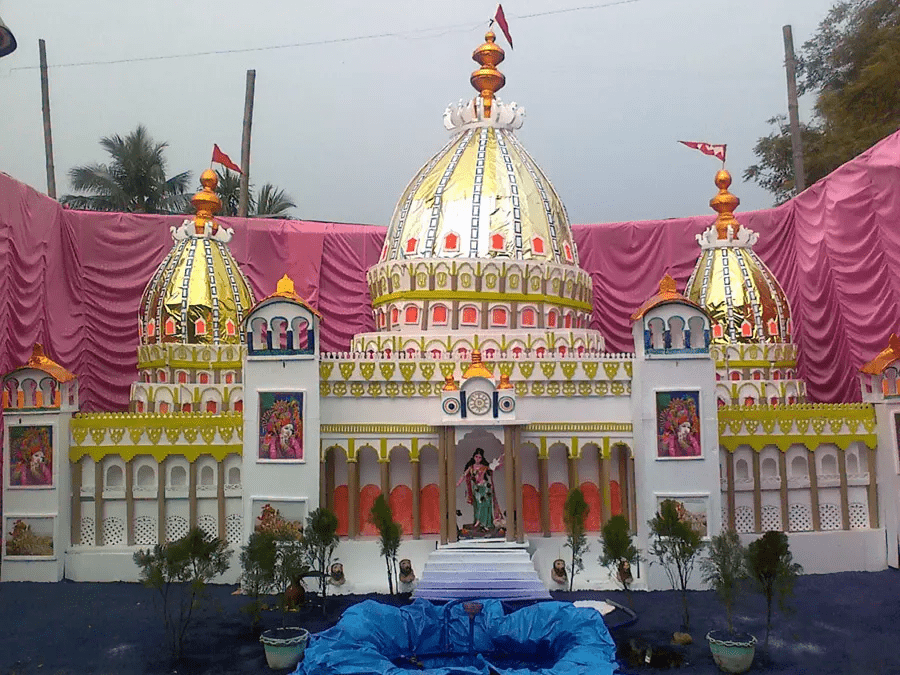
While Saraswati Puja remains the core observance, regional traditions add distinct flavours to Basant Panchmi celebrations.
Eastern India Focus
In West Bengal, Odisha, and Assam, Saraswati Puja is often celebrated with the same scale as major festivals. Young students, especially, treat the day as a milestone.
Features commonly seen include:
- Community pandals organised by students
- Floral decorations and themed idols
- Evening cultural gatherings
For many families, the first Saraswati Puja of a child is remembered for life.
Northern and Central India Traditions
In northern states, Basant Panchmi blends Saraswati worship with seasonal festivities. Kite flying, fairs, and open gatherings complement temple rituals.
The festival becomes both spiritual and social, allowing different expressions to coexist without conflict.
Food Traditions on Basant Panchmi
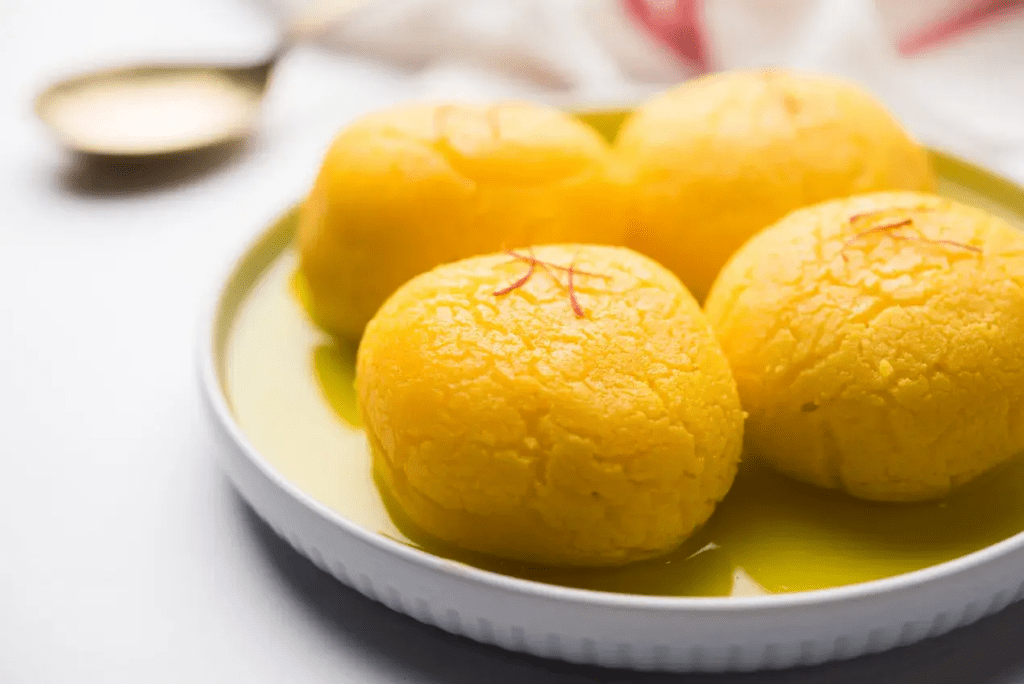
Food during Saraswati Puja 2026 reflects simplicity, seasonality, and symbolism rather than indulgence.
Common Sweets and Offerings
Yellow-coloured dishes dominate kitchens on Basant Panchmi, aligning with the festival’s theme.
Popular items include:
- Kesar halwa
- Boondi ladoo
- Sweet rice preparations
- Seasonal fruits
These foods are shared after puja, reinforcing community bonds.
Meaning Behind the Cuisine
The emphasis on mild sweetness and warm ingredients reflects balance. Just as knowledge should be nourishing and steady, food on Saraswati Puja avoids excess.
Spiritual Discipline and Inner Focus

Beyond visible rituals, Saraswati Puja encourages internal alignment. Many devotees observe silence for short periods, meditate, or reflect on personal goals.
Practices Linked to Learning
On Saraswati Puja 2026, it is common to see:
- Avoidance of unnecessary speech
- Conscious reading or chanting after puja
- Renewal of study routines
This inward focus distinguishes the festival from more outwardly celebratory occasions.
Knowledge as Responsibility
The worship of Saraswati is not merely about gaining intelligence. It is about using knowledge ethically. This message resonates strongly in academic spaces and professional communities.
Basant Panchmi Date and Key Timings at a Glance
| Event | Date and Time |
| Basant Panchmi Date | 23 January 2026 |
| Saraswati Puja Muhurat | 7:13 AM – 12:33 PM |
| Seasonal Significance | Beginning of Spring |
This overview helps families, institutions, and organisers plan Saraswati Puja 2026 without confusion.
Relevance of Saraswati Puja in Modern Life
Even in fast-paced urban environments, Saraswati Puja retains relevance. The focus on clarity, creativity, and discipline speaks directly to contemporary challenges.
Students face academic pressure, professionals navigate constant information flow, and creators seek originality. Basant Panchmi offers a pause, a reminder that knowledge flourishes best when approached with humility.
So when Saraswati Puja 2026 arrives on January 23, the question is not only about rituals. It is also about intent. What kind of learning do we want to invite into our lives?
A Festival That Balances Tradition and Growth
Saraswati Puja 2026, observed on Basant Panchmi, stands at the intersection of heritage and aspiration. Rooted in ancient belief yet open to modern interpretation, it celebrates the human capacity to learn, create, and evolve.
As yellow fields announce spring and classrooms fill with quiet devotion, the festival affirms a simple truth: knowledge is not accumulated in haste, but nurtured with care.