
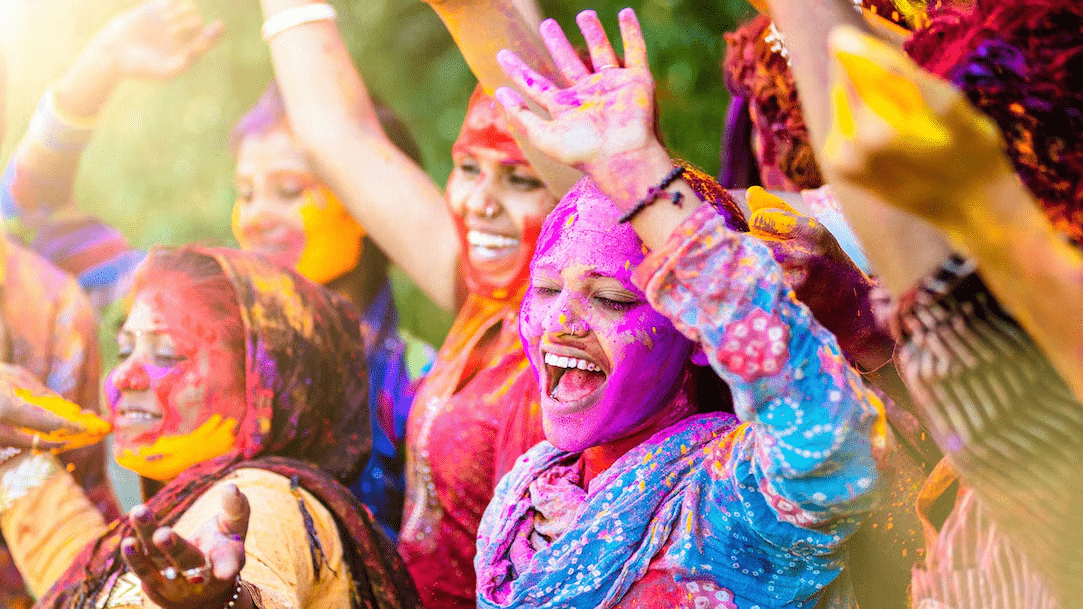
Holi 2025 is set to bring colour, sound, and collective joy across India as one of the most socially unifying festivals of the year. Celebrated at the threshold of spring, Holi blends mythology, seasonal change, and community expression into a two-day ritual that feels both ancient and immediate. Streets turn vibrant, music flows freely, and social boundaries soften in a way few festivals manage.
For many families, the first question every year is practical and symbolic at once: holi 2025 date. The timing of Holi shapes travel, rituals, and regional celebrations. In 2025, the festival follows a clear calendar alignment, allowing households and communities to plan both the sacred and celebratory aspects with certainty.
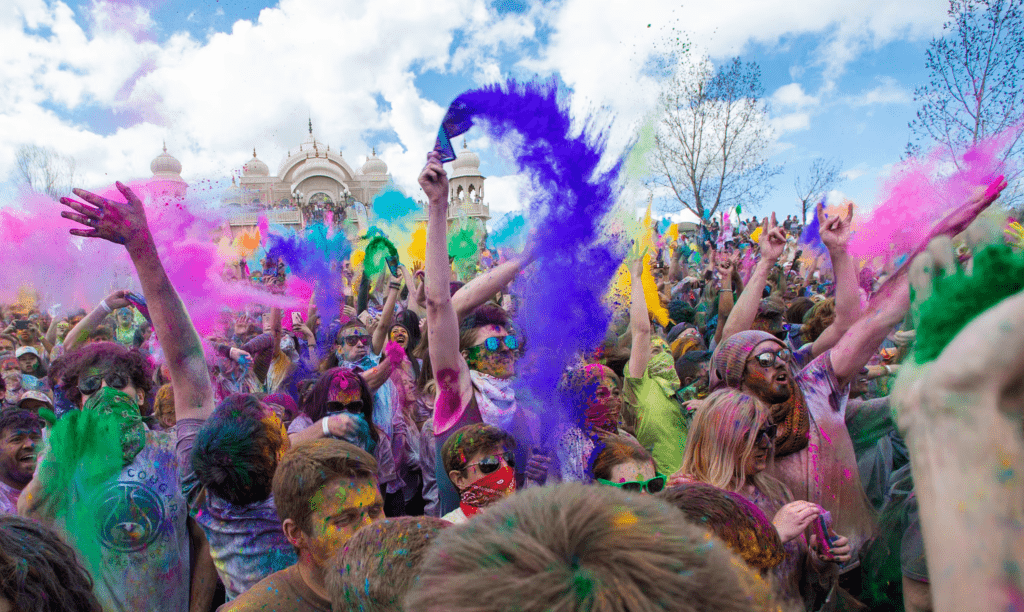
Holi 2025 Date in India Explained
The holi 2025 date is determined by the Hindu lunar calendar, specifically the full moon day of the month of Phalgun. This lunar logic places Holi toward the end of winter, just as agricultural and seasonal cycles begin to shift.
Confirmed Holi Dates for 2025
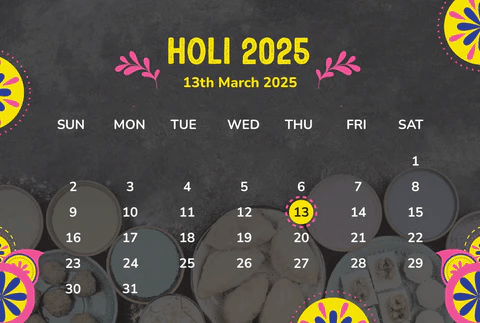
In India, Holi 2025 will be celebrated on Friday, March 14. The rituals begin a day earlier with Holika Dahan, also known as Choti Holi, which falls on the evening of Thursday, March 13.
This two-day structure defines holi in 2025 across most regions:
- March 13, evening: Holika Dahan
- March 14, daytime: Rangwali Holi or Dhuleti
This alignment answers the recurring search queries around 2025 holi date and holi 2025 date in india with clarity.
Why the Date Matters
Holi rituals are closely tied to timing. Holika Dahan must be performed after sunset during the appropriate lunar phase, while the colour celebrations take place the following morning. Understanding the correct 2025 holi date ensures that tradition and celebration remain in balance.
The Two-Day Structure of Holi in 2025
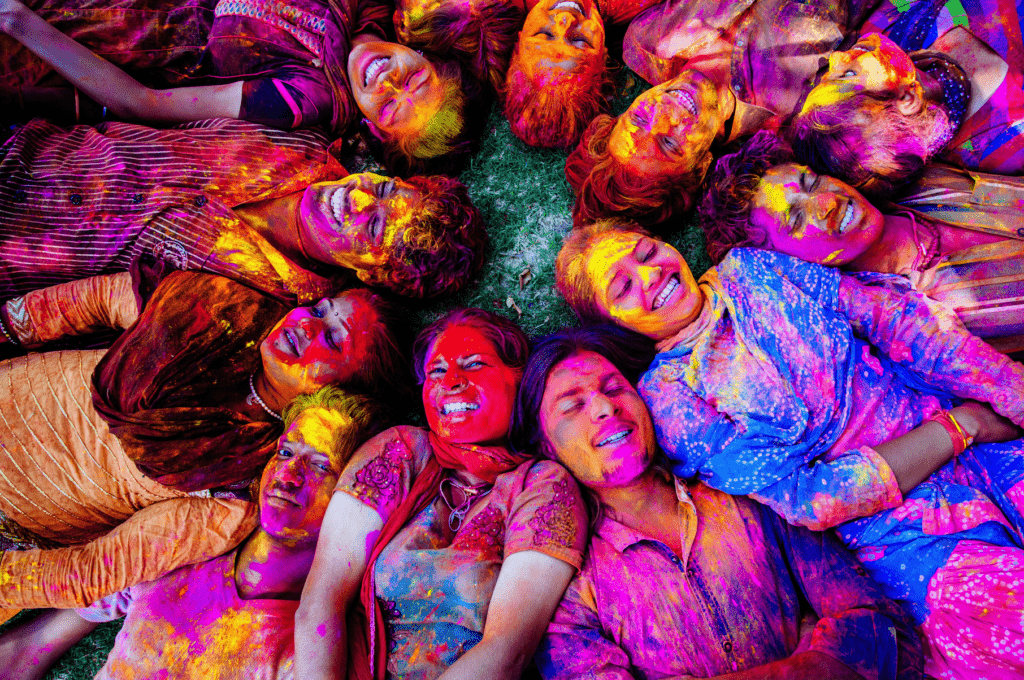
Holi is not a single event but a carefully sequenced festival where symbolism leads and celebration follows.
Holika Dahan and Its Meaning
The first day of Holi 2025 centres on Holika Dahan, the lighting of a ceremonial bonfire. This ritual represents the destruction of negativity and the reaffirmation of moral order.
Devotees gather around the fire to:
- Offer prayers for protection and harmony
- Circumambulate the bonfire three, five, or seven times
- Symbolically release fears and resentment
Ash from the fire is sometimes taken home, believed to carry auspicious energy.
Rangwali Holi and Social Celebration
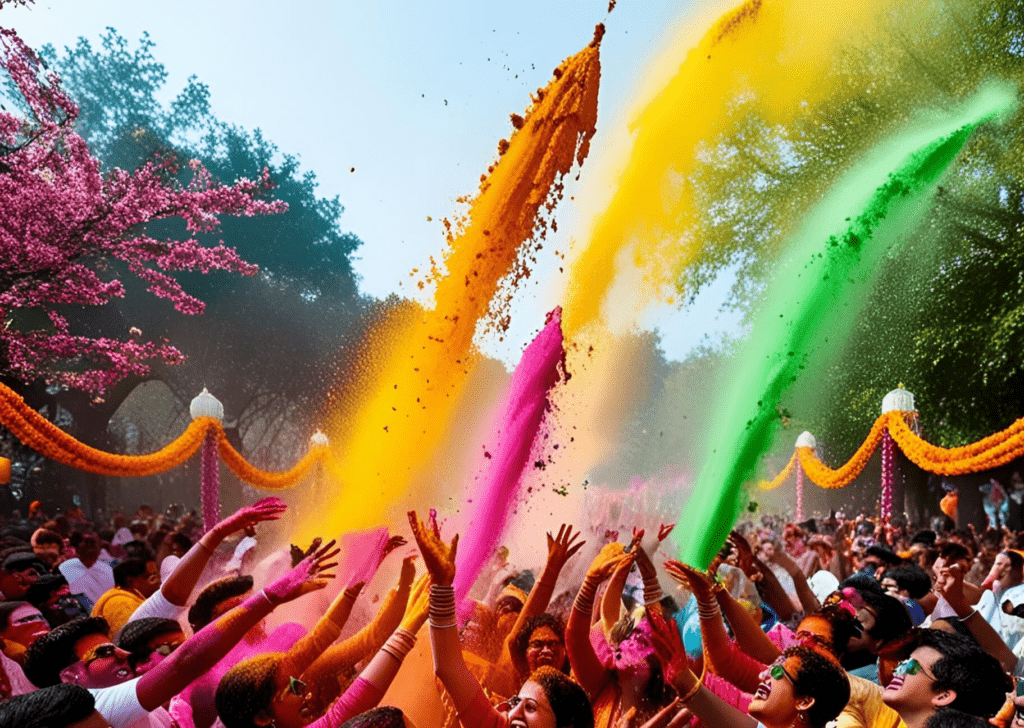
The second day, known as Dhuleti or Rangwali Holi, is the most visible face of holi in 2025. Colours are thrown, water balloons fly, and music fills neighbourhoods.
This act of colour play carries deeper meaning. It reflects the idea that joy, like colour, is meant to be shared freely.
Mythological Roots of Holi
The enduring power of Holi lies in its stories. These narratives give moral structure to what might otherwise appear as pure festivity.
The Legend of Prahlad and Holika
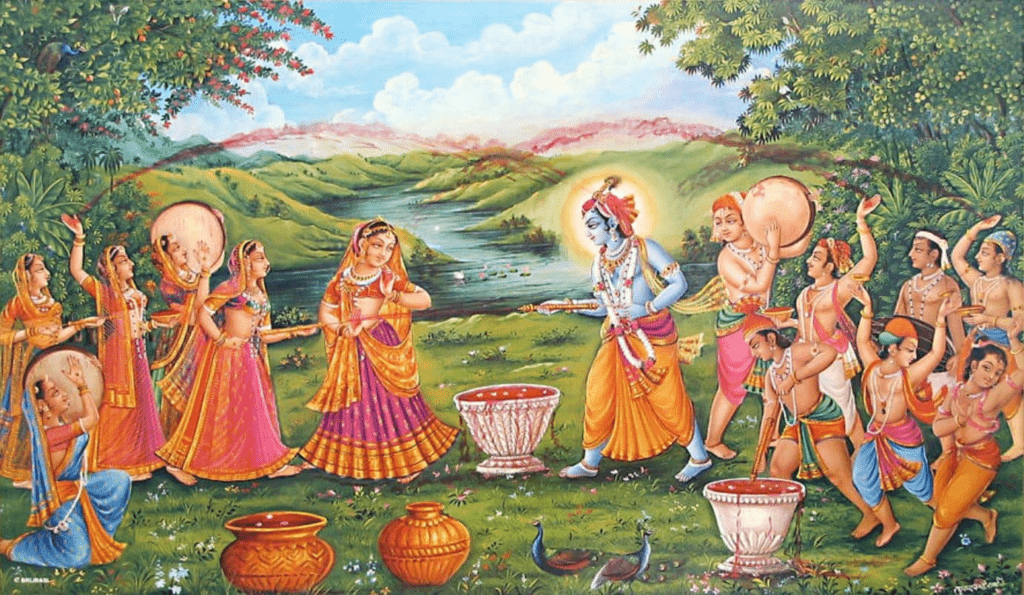
One of the central legends behind Holi explains the origin of Holika Dahan. Hiranyakashipu, a powerful king, demanded worship from all. His son Prahlad, however, remained devoted to Lord Vishnu.
To punish him, Hiranyakashipu asked his sister Holika, who was believed to be immune to fire, to sit with Prahlad in flames. The outcome reversed expectations:
- Holika was consumed by fire
- Prahlad emerged unharmed
- Good triumphed over arrogance and cruelty
This story anchors holi 2025 in the idea that righteousness endures beyond power.
Krishna and Radha’s Holi
Another narrative links Holi to the playful love between Krishna and Radha. This association is especially strong in Mathura and Vrindavan, where celebrations extend over days.
Here, colour becomes expression, not conflict. Prem aur shararat ka yeh rang Holi ko jeevant bana deta hai.
Cultural Significance of Holi 2025
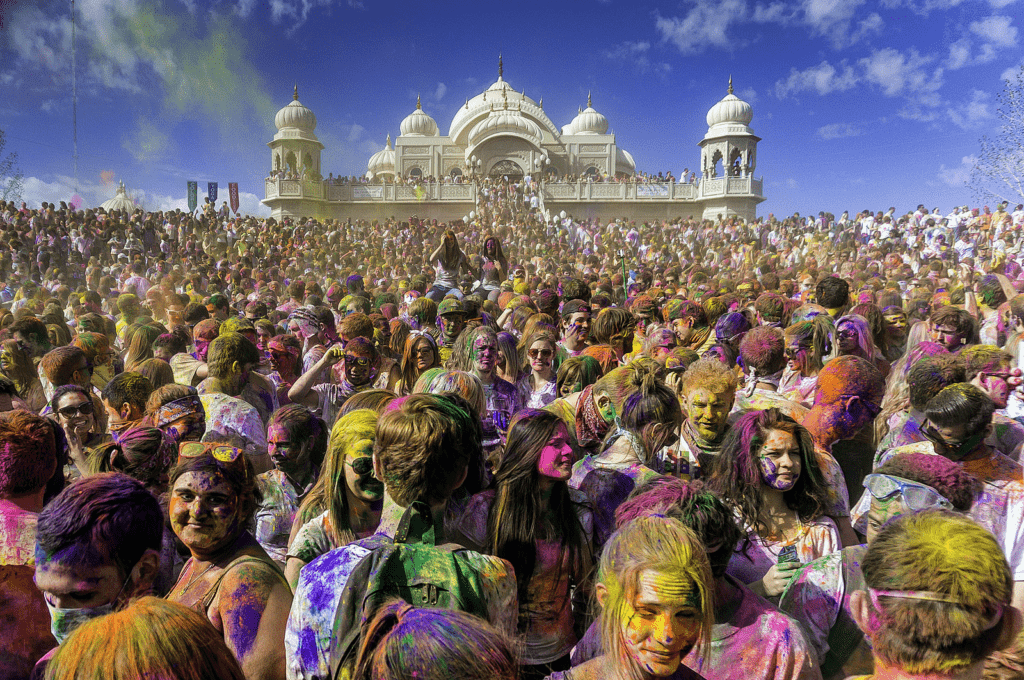
Beyond mythology, Holi functions as a social equaliser. For one day, differences of status, age, and background fade.
Holi as a Seasonal Marker
Holi 2025 also marks the arrival of spring. Fields change colour, days grow warmer, and nature signals renewal. This seasonal transition explains why the festival feels instinctively optimistic.
Social Harmony and Renewal
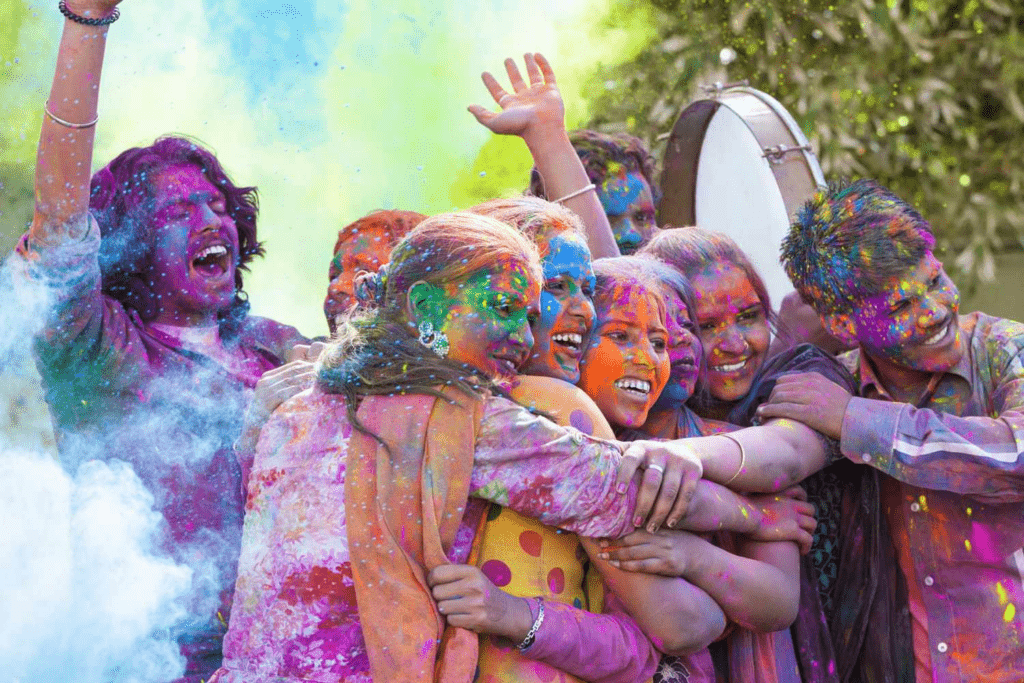
Holi encourages reconciliation. Old disputes are softened, greetings replace grudges, and shared food reinforces connection.
Traditional Holi foods include:
- Gujiya and other sweets
- Thandai and seasonal drinks
- Savoury snacks prepared for guests
Food, colour, and music combine to dissolve emotional distance.
How Holi Is Observed Across Regions
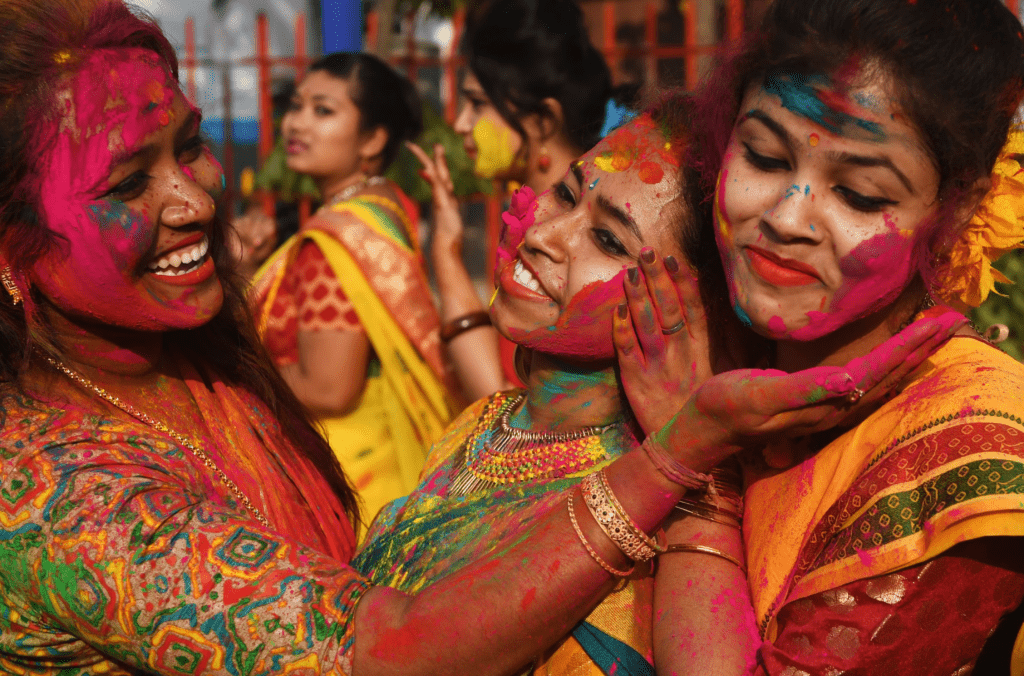
While the core rituals remain consistent, regional expressions add texture to holi in 2025.
Northern India
In northern states, Holi is loud, energetic, and communal. Streets become gathering spaces, and participation is open-ended.
Mathura and Vrindavan
In Braj, Holi is devotional theatre. The celebrations linked to Krishna extend beyond March 14, making the region a spiritual centre during 2025 holi.
Urban Adaptations
In cities, Holi often shifts to housing societies and organised events. Time-bound celebrations replace day-long revelry, yet the spirit remains intact.
Is it possible for a festival to adapt so much and still remain itself?
Ritual Practices Followed During Holi
Holi 2025 is guided by rituals that balance symbolism with celebration. These practices vary slightly by region but follow a shared cultural rhythm that connects households across India.
Holika Dahan Customs
On the evening before Rangwali Holi, families gather for Holika Dahan. The bonfire is prepared using wood, dried leaves, and symbolic elements that represent negativity.
Common practices include:
- Lighting the fire after sunset
- Circumambulating the bonfire with prayers
- Offering grains, coconut, or seasonal produce
The act reflects release rather than destruction. Buraai ko chhod kar aage badhne ka sankalp hi iska saar hai.
Post-Dahan Traditions
After the fire ritual, devotees often:
- Apply tilak on each other
- Consume roasted grains
- Carry a small amount of ash home
These actions are believed to invite peace and protection in the coming year.
Rangwali Holi: Colours, Music, and Emotion
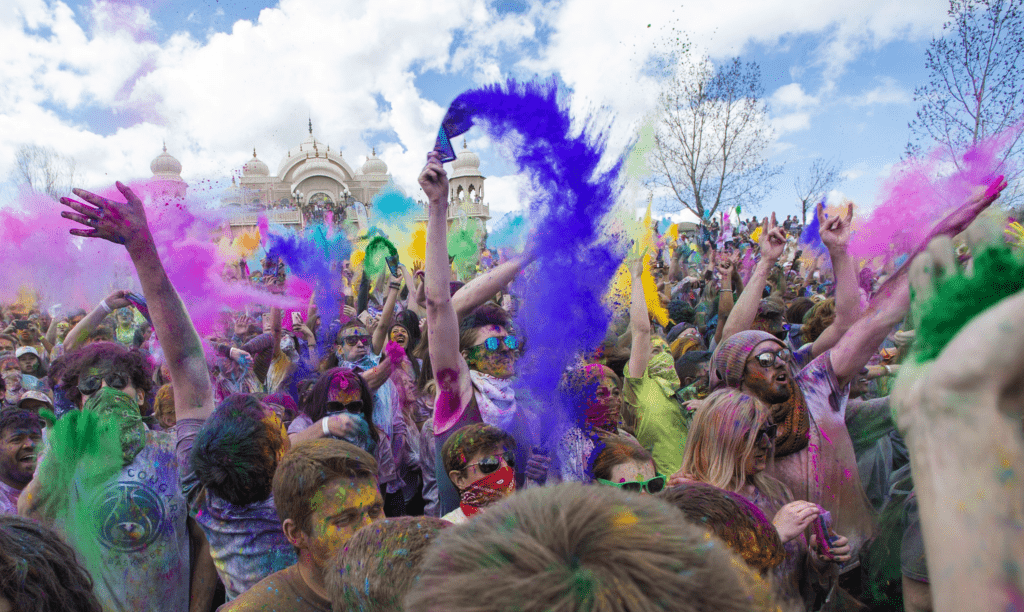
The second day of holi in 2025 is visually dramatic and emotionally expressive. Rangwali Holi is where symbolism gives way to shared joy.
Playing With Colours
Colours are applied with hands, water guns, or balloons. Each colour carries cultural meaning, from vitality to forgiveness.
The act of applying colour represents:
- Equality, as everyone looks the same
- Letting go of past resentment
- Openness to renewal
This is why holi 2025 feels less like an event and more like a collective release.
Music and Dance
Songs, drums, and spontaneous dancing define the atmosphere. Folk tunes blend with modern tracks, creating a bridge between generations.
For many, this is the most anticipated part of 2025 holi, where laughter replaces formality.
Food and Festive Cuisine During Holi
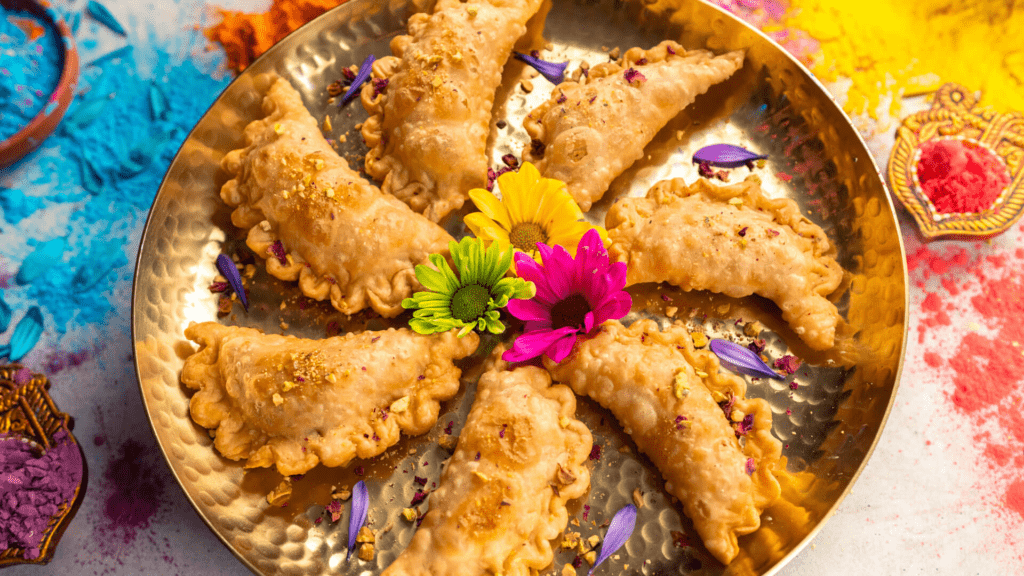
Food anchors the celebration, turning gatherings into lasting memories. Holi cuisine reflects indulgence, hospitality, and seasonality.
Traditional Holi Dishes
Across regions, kitchens prepare special items such as:
- Gujiya filled with khoya and dry fruits
- Malpua and other festive sweets
- Thandai made with milk, spices, and nuts
These foods are shared freely, reinforcing the spirit of abundance.
Role of Hospitality
Guests are welcomed without appointment. Neighbours, friends, and relatives move freely between homes. Khana aur rang dono rishton ko mazboot banate hain.
Holi 2025 in Modern Urban Life
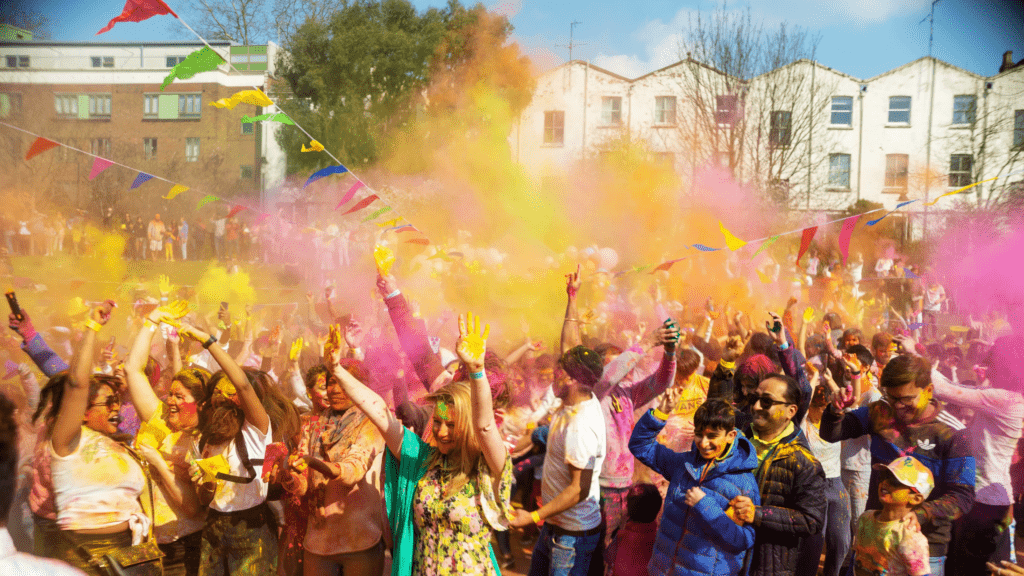
While the essence of Holi remains intact, urban living has reshaped its expression.
Organised Celebrations
In cities, many people participate in:
- Housing society events
- Public Holi gatherings
- Time-bound celebrations for safety
These formats allow celebration without losing control, especially for families and working professionals.
Changing Social Boundaries
Holi in 2025 also reflects evolving sensibilities. Awareness around consent, safety, and respect has grown, reshaping how people engage with the festival.
Can a centuries-old festival evolve without losing its soul? Holi seems to answer yes.
Environmental Awareness and Responsible Celebration
Recent years have brought a stronger focus on sustainability during festivals, and holi 2025 continues this shift.
Eco-Friendly Colours
Many communities now encourage:
- Natural, plant-based colours
- Reduced water usage
- Avoidance of chemical powders
These steps protect both health and environment.
Community Responsibility
Local administrations and organisers promote cleanliness and controlled celebrations. This shared responsibility ensures that joy does not come at a public cost.
Why Holi 2025 Continues to Matter
Holi endures because it speaks to human emotion. It allows expression without explanation and joy without permission.
Emotional and Cultural Relevance
In a society often divided by roles and pressures, Holi offers a reset. It creates space for laughter, forgiveness, and shared humanity.
The festival reminds people that differences can dissolve, at least for a day.
Holi as a Cultural Anchor
Holi 2025 stands as a reminder that tradition survives through participation, not preservation alone. Each generation reshapes it while carrying its core forward.
Key Holi 2025 Dates at a Glance
| Occasion | Date |
| Holika Dahan | March 13, 2025 |
| Rangwali Holi | March 14, 2025 |
| Hindu Month | Phalgun |
| Festival Nature | Two-day celebration |
This overview clarifies planning for holi 2025 date in india and related observances.
Holi 2025: A Festival of Renewal
As colours fade and streets return to routine, Holi leaves behind something quieter but lasting. A sense of lightness. A reminder that joy can be simple and shared.
Holi in 2025 arrives not just as a festival, but as a pause in time. A moment where laughter outweighs logic, and connection matters more than difference.
When the last colour washes away, what remains is the feeling that renewal is possible, every year, again and again.